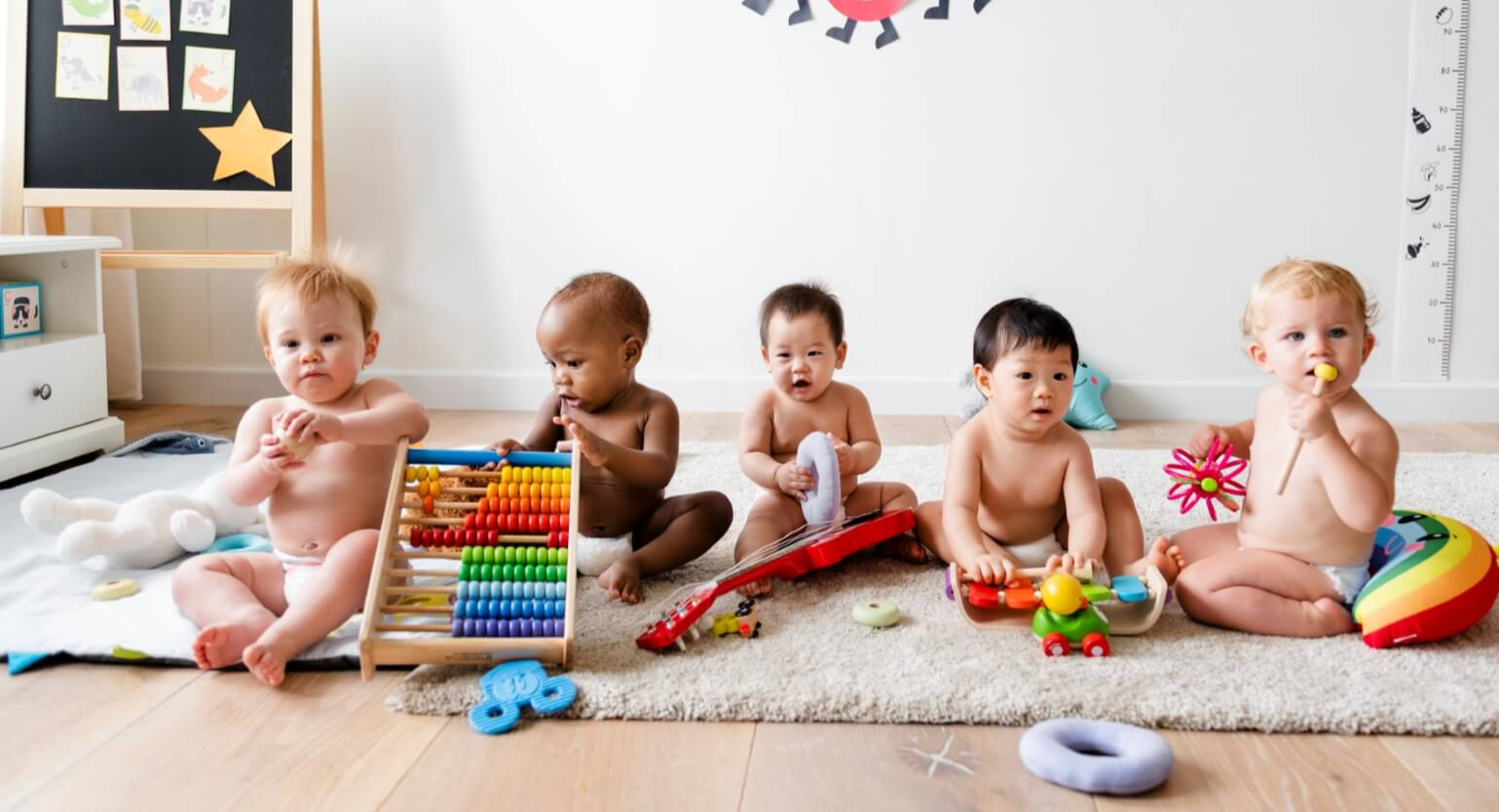
Something has shifted in how Pakistani parents think about toys. A few years ago, the flashier a toy looked on a store shelf, the better it sold. Lights, sounds, buttons, screens, all of it was considered a sign of quality. But a growing number of parents across Karachi, Lahore, Islamabad, and smaller cities in between are now deliberately moving away from that kind of toy and toward something quieter, simpler, and much more intentional. They are choosing Montessori toys. At Infantlee, we see this shift happening in real time through the questions parents ask, the products they search for, and the conversations happening in parenting communities across the country. This blog explores what is behind that shift, why it makes sense for Pakistani families specifically, and what Montessori toys for early learning actually look like in practice.
What Montessori Toys Actually are and What They are Not?
The word Montessori gets used loosely, which causes a lot of confusion for parents who are just starting to look into it. The Montessori method was developed by Italian physician and educator Maria Montessori in the early 1900s, based on the idea that children learn best through hands-on, self-directed exploration rather than passive instruction. Montessori toys are designed to support that same principle.
A Montessori toy is not defined by material alone. The most common misconception is that Montessori means wooden. While natural materials are preferred because of the sensory richness they provide, what actually makes a toy Montessori is its design principle: it focuses on one skill at a time, it allows the child to correct their own mistakes without adult intervention, it invites open-ended exploration, and it matches the child's actual developmental stage. A basic stacking game, a set of pretend play tools, or even a simple animal figure set can be Montessori in spirit when it is age-appropriate and lets the child figure things out independently.
What Montessori toys are not: battery-powered devices that entertain passively, toys that do the playing for the child, or anything that overstimulates with flashing lights and sounds. The goal is engagement through doing, not engagement through watching.
Why Pakistani Parents are Making the Switch?
Screen Time is a Genuine Worry
Pakistani parents in 2026 are more screen-aware than any previous generation of parents in this country. The average child in an urban Pakistani household is exposed to a tablet or phone from a very early age, often as a calming tool during meals or car rides. Parents who are aware of the research on early screen exposure are actively looking for alternatives that keep a child equally engaged without a screen. Montessori toys are one of the most reliable answers to that problem because they require the child to be the active participant.
Rote Learning Fatigue
There is a growing frustration in Pakistani parenting circles with the rote memorisation culture that dominates early childhood education here. Parents who went through that system themselves and felt it limited their creativity and problem-solving skills are actively choosing differently for their children. Montessori toys for early learning are fundamentally about process over result. A child stacking rings in order is not being told the right answer. They discover through trial and error that the largest ring goes first, and that discovery stays with them in a way that being told the answer never would.
Quality Over Quantity
Pakistani households have historically been inclined toward buying more toys rather than better ones, particularly around Eid and birthdays when gifting is central. But a meaningful segment of parents is now asking a different question: does this toy actually develop anything? One well-made stacking toy that builds fine motor skills, concentration, and problem-solving for two years is now considered better value than ten plastic toys that get abandoned in a week. That shift in thinking is directly driving interest in Montessori options.
What Montessori Toys Look Like for Pakistani Homes?
One of the most common barriers Pakistani parents face is not awareness but access. Finding genuine Montessori toys Pakistan online that are actually in stock, fairly priced, and deliverable to your city has historically been difficult. International options either require expensive shipping or long waits. This is changing, but slowly.
The good news is that many Montessori principles can be applied to toys that are already locally available. Here is what to look for in each category:
Pretend Play and Practical Life Toys
Montessori emphasises practical life from a very early age because children want to imitate what adults do around them. A Kids Tool Set Toy Kit for pretend play construction or a Dinosaur Tool Set with 18 pieces are excellent examples of this. Children at 2 to 4 years old are naturally drawn to tools, construction, and fixing things, and a pretend tool set gives them a safe outlet for that drive. This is one of the most Montessori-aligned categories available locally and one of the most underrated by parents who dismiss it as a boys-only toy.
Stacking and Building for 2 Year Olds
For Montessori toys for 2 year olds, stacking and building toys are the most developmentally aligned choice available. The Stacking Game with Box in our games collection is a perfect example. It develops hand-eye coordination, teaches sequencing and order, builds patience, and provides a self-correcting challenge: the tower falls when placed incorrectly, and the child learns from that without needing an adult to explain what went wrong. This is exactly the kind of feedback loop that Montessori education values.
Animal Figures and Real World Representation
Maria Montessori believed strongly that young children should encounter realistic representations of the world before fantasy. Animal figures are classic Montessori materials for exactly this reason. Our Animal Figure collection lets children handle, sort, name, and arrange realistic animal figures, building vocabulary, classification skills, and imaginative play simultaneously. For toddlers aged 18 months to 3 years, a small set of realistic animal figures provides more developmental value than most battery-powered toys at a much higher price point.
Soft and Sensory Toys for Younger Babies
For babies under 12 months, Montessori play focuses on sensory input: different textures, gentle sounds, and objects that respond to touch and movement. Our soft toys collection has options including plush companions with varied textures and soft rattles that give babies exactly this kind of sensory-rich input without overstimulation. The key is keeping it simple and letting the baby lead the exploration.
The Pakistan Context: What International Guides Miss
Most articles on Montessori toys Pakistan are written by bloggers in the UK, US, or Australia for audiences with very different realities. Here is what those guides consistently miss for Pakistani parents:
• Joint family systems mean more adults interacting with the child, which is actually a Montessori advantage. Multiple caring adults observing and responding to a child's natural curiosity creates a richer learning environment than an isolated nuclear family home.
• Load shedding and power outages make battery-dependent toys unreliable. Montessori toys that require no power and work in any light condition are practically well-suited to Pakistani household realities.
• Finding Montessori toys Pakistan Karachi or Lahore or Islamabad-based is now easier than it was three years ago, but delivery outside major cities still takes time. Buying durable, open-ended toys that hold a child's interest for months is better value than frequent small toy purchases.
• Pakistani children often play in groups from a very young age, with cousins and neighbourhood children around regularly. Montessori toys that work for group play, like stacking games and building sets, are more useful here than solitary, screen-based educational apps.
Common Mistakes Pakistani Parents Make When Buying Montessori Toys
Understanding the principle is one thing. Shopping for it is another. Here are the most frequent missteps:
Buying Too Many at Once
The Montessori approach specifically recommends limiting the number of toys available at one time. A child with twelve toys available will play shallowly with all of them. A child with two or three will explore each one more deeply and for longer. Rotate toys every week or two to maintain interest rather than overwhelming the child with everything at once.
Prioritising Appearance Over Function
Beautiful aesthetics are a genuine part of Montessori philosophy, but a toy that looks Montessori and functions like a passive entertainment device is not serving the child well. Before buying, ask: does this require the child to do something, figure something out, or create something? If the toy does the work, it is not Montessori regardless of whether it is wooden.
Ignoring Age Appropriateness
A stacking toy given to a 6-month-old is frustrating and pointless. The same toy given at 18 months is transformative. Matching the toy to the child's actual developmental stage is more important than the toy's quality. Montessori toys online Pakistan searches often return results without clear age guidance, so always check before ordering.
Final Thoughts
The shift toward Montessori toys for early learning in Pakistan is not a trend driven by social media aesthetics, though that plays a role. It is driven by parents who have genuinely thought about how their child learns best and concluded that open-ended, hands-on, low-stimulation play produces better outcomes than passive entertainment. For Pakistani families navigating screen time concerns, rote learning pressure, and a toy market full of cheap plastic novelties, Montessori principles offer a practical and proven alternative. You do not need to import anything expensive or redesign your whole home. You just need to choose toys with more intention.
Explore our full range of newborn and infant toys at Infantlee and our Toy Zone collection for options that align with Montessori principles and are available for delivery across Pakistan.