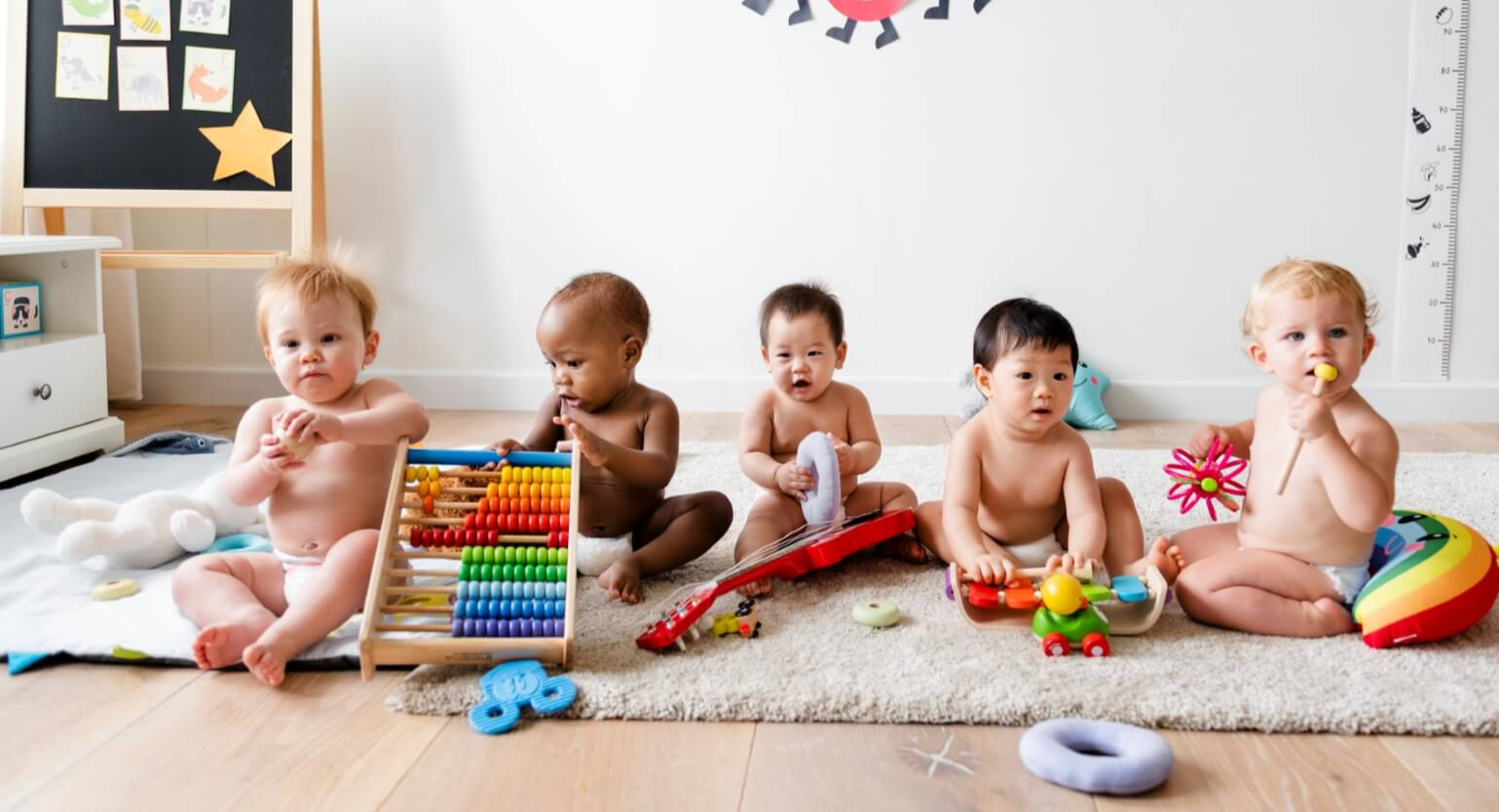
If you have spent any time in Pakistani parenting groups recently, you have probably noticed that Montessori toys have become a topic of genuine interest. Parents are asking whether the Montessori approach is worth the investment, whether traditional toys have any real value left, and which type of toy actually does more for a child's development. At Infantlee, we carry a wide range of both and we hear this question from parents every week. This blog gives you an honest answer, without dismissing either approach and without the kind of one-sided promotion that most guides in this space tend to offer.
The honest starting point: Montessori toys vs traditional toys is not a fight where one side wins. Both have genuine strengths, both have limitations, and the best play environment for a Pakistani child in 2026 typically draws from both rather than committing exclusively to one. What matters is understanding what each type does well and when.
What Exactly are Montessori Toys and What are Traditional Toys?
Montessori Toys Defined
A Montessori toy is not defined by material or aesthetics alone. The common misconception is that Montessori simply means wooden and natural-looking. In reality, a Montessori toy is defined by its educational design principles. It presents one concept at a time, it is self-correcting (the child discovers the error without needing adult instruction), it invites open-ended exploration, and it is matched precisely to a child's developmental stage. A Montessori toy hands the learning process to the child.
What commonly gets labelled Montessori in the Pakistani market includes stacking rings, shape sorters, knobbed puzzles, practical life sets like tool kits, and animal figure sets that support realistic world exploration. The defining quality is always whether the child is doing the intellectual work, not whether the material is wood.
Traditional Toys Defined
Traditional toys cover everything else: battery-operated toys with lights and sounds, plastic play sets with multiple interactive features, musical toys, cars, dolls with electronic functions, kitchen sets with spray mist and music, and character-themed toys. These are the toys most Pakistani children grow up with and the ones that dominate the local market.
Traditional toys are not educationally inert, despite what some Montessori advocates suggest. They develop specific skills, create specific types of engagement, and serve important functions in a child's play life. The question is which functions, and at which ages.
Montessori Toys vs Traditional Toys: An Honest Side-by-Side Comparison
Concentration and Sustained Attention
This is where Montessori toys have a clear and well-documented advantage. A Montessori activity, because it presents a single challenge and requires the child to work it out independently, naturally builds longer attention spans. When a child works a knobbed puzzle repeatedly until they master it, they are developing the ability to stay with a problem. Traditional toys with multiple lights, sounds, and functions tend to shift attention rapidly between features, which can work against sustained concentration over time. For Pakistani parents concerned about their child's ability to focus before school, Montessori-style activities offer a genuine developmental advantage here.
Imaginative and Social Play
Traditional toys win convincingly in this category. A kitchen play set with spray mist, music, and 42 accessories is an environment for social storytelling in a way that a knobbed cylinder simply is not. When two or three children play a pretend restaurant game together, they are building social negotiation, language, and collaborative imagination simultaneously. Our 42 Pcs Kitchen Play Set with Spray Mist and Music is a perfect example of a traditional toy that generates exactly this kind of rich, sustained social play. Montessori toys tend to work better in individual, child-directed exploration rather than group imaginative scenarios.
Fine Motor Development
Both develop fine motor skills but through different mechanisms. Montessori toys like shape sorters, stacking sets, and practical life tools build precision and deliberate hand control. Traditional toys like doll accessories, kitchen utensils, and pretend tool kits develop the same fine motor pathways in a more narrative context. Neither is clearly superior here, they just approach the same outcome differently.
Emotional Comfort and Attachment
Traditional soft toys have no real Montessori equivalent for emotional function. A plush companion that a child sleeps with, carries everywhere, and returns to for comfort is not a Montessori tool, but it is one of the most developmentally important objects in many children's early years. Transitional objects, which is what developmental psychologists call comfort toys, support emotional regulation, self-soothing, and object permanence in ways that cannot be replicated by any structured educational toy. Our soft toys collection covers this category well for parents who want quality plush companions alongside their educational toy selection.
Parental Involvement Required
Montessori toys are specifically designed to work without adult facilitation. The child drives the activity, discovers the errors, and determines the pace. This is excellent when a parent needs the child to play independently. Traditional toys often require more adult scaffolding, at least initially, to get the most out of them. A kitchen set with 42 pieces needs a parent to help introduce the play scenario before a young child can independently sustain it. This is not a weakness, but it is a practical consideration for busy households.
Which Toys Work Best at Which Age in Pakistan?
Montessori Toys for 2 Year Olds in Pakistan
At 2, a child is in the heart of the sensory motor stage. Montessori toys for 2 year olds in Pakistan should focus on cause and effect, simple sorting, and practical life imitation. A pretend tool kit like our Kids Tool Set Toy Kit for pretend play construction works well here because it lets a 2-year-old imitate what adults do in the home, which is the primary learning drive at this age. Simple animal figures for sorting and naming also serve this age group well without overstimulating them. Traditional musical toys can supplement these, providing sensory variety, but should not dominate a 2-year-old's primary play time.
Montessori Toys for 3 to 4 Year Olds in Pakistan
Between 3 and 4, children are ready for more complex Montessori activities and also for richer traditional play. Montessori toys for 3 to 4 year olds in Pakistan in this period include building sets with specific goals, practical life kits with more components, and early sorting or sequencing activities. The 98-Piece Marble Ball Pipe Building Blocks set sits in this Montessori-aligned category well: it requires planning, sequencing, and problem-solving, and the marble run self-corrects when pieces are placed incorrectly. At the same time, 3 to 4 year olds are also entering the peak of imaginative play, which means traditional kitchen sets and doll play become more educationally productive at this age than at any other stage.
Montessori Toys for 5 Year Olds in Pakistan
By 5, children are ready for Montessori activities that introduce early academic concepts through hands-on exploration: simple counting, letter recognition, pattern matching, and classification activities. Montessori toys for 5 year olds in Pakistan at this stage include card-based early education machines, sorting and pattern toys, and construction sets with higher piece counts that require sustained attention. The Card Early Education Machine from our collection is a locally available option that introduces early literacy and numeracy concepts in a hands-on format. Traditional toys at 5 become more social and competitive: sports sets, group games, and collaborative play scenarios are all appropriate and valuable at this age.
What This Debate Looks Like in the Pakistani Context?
Most Montessori toys online in Pakistan guides are written with a narrow lens that does not account for how Pakistani families actually live and play. Here is what the local reality adds to this comparison:
• Joint family play dynamics: Pakistani children often play in groups with cousins and siblings of varying ages. Montessori toys, which are designed for individual, self-directed work, do not always translate well to group play settings. Traditional play sets that naturally accommodate multiple children simultaneously often serve Pakistani households better as the primary group play option.
• Load shedding and battery dependency: Many traditional toys rely on batteries or electricity. During load shedding, they become unusable. Montessori-style toys that require no power source are more reliably available throughout the day regardless of the electricity situation.
• The rote learning pressure: Pakistani children face significant rote memorisation pressure from school from a very young age. Montessori-style toys that build independent problem-solving, self-correction, and concentration at home provide a genuinely useful counterbalance to the passive, instruction-following mode that school often demands.
• Budget reality: Quality imported Montessori toys can be expensive when purchased through international channels. The best approach for Pakistani parents is to look for locally available toys that embody Montessori principles without the premium import price, and supplement with traditional play sets that serve the social and imaginative play functions that Montessori-specific toys do not cover.
What Pakistani Parents Should Actually Do
The answer is not to pick a side. It is to be intentional about what role each toy plays in your child's play environment.
Keep a few well-chosen Montessori-aligned toys available for solo, focused play sessions. These are the toys a child should encounter in a quiet moment when they can give their full attention to working something out independently. Keep the number small so the child returns to each one and goes deeper rather than switching quickly between many options.
Have traditional play sets available for group play, social scenarios, and the kind of long imaginative games that children run for an hour or more with siblings and cousins. Kitchen sets, doll play, sports sets, and building toys with narrative potential all serve this function. Browse our Toy Zone collection for a wide range of both types in one place, and our Girls Toys range for pretend play sets that bring the best of traditional play to children who thrive in imaginative, social scenarios.
Final Thoughts
The Montessori toys vs traditional toys comparison is less useful as a competition and more useful as a framework for thinking about what your child needs at different moments of their day. Montessori-aligned toys serve focused, independent, cognitive development. Traditional toys serve social imagination, emotional attachment, and the kind of group play that Pakistani family life naturally creates a lot of space for. Both have a place, and the most thoughtful toy collections include both.