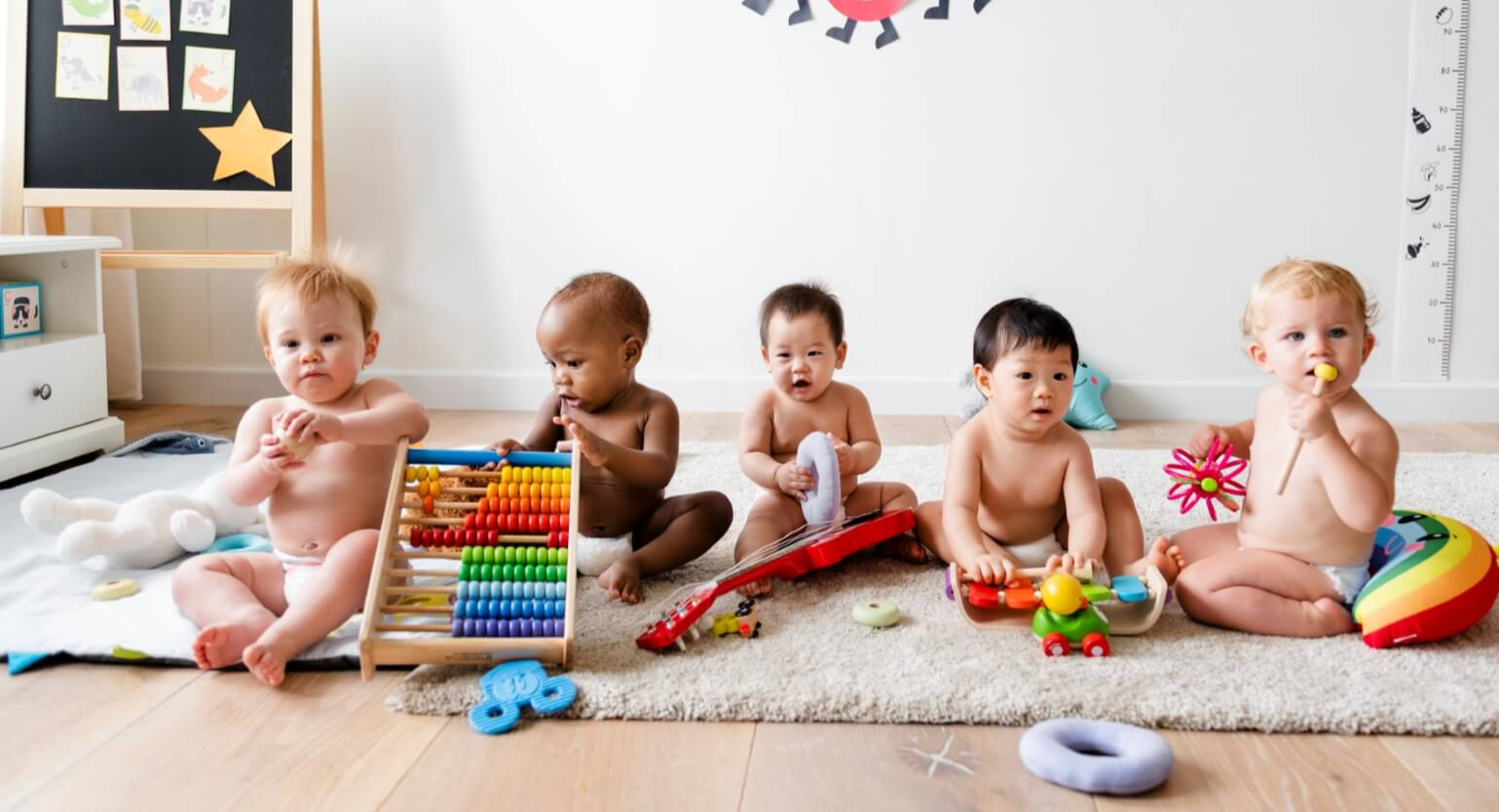
Every parent knows the feeling. The child has thirty toys. They are bored. They want a new one. And somehow, buying another toy only solves the problem for about forty-eight hours before the cycle repeats. The solution is not more toys. It is toy rotation for kids, a simple system that makes existing toys feel new again by limiting how many are available at once and swapping them out on a regular schedule. At Infantlee, we talk to parents about this all the time because the best toy collection is not the biggest one. It is the right selection, well-managed. This guide walks you through the whole system including what categories work at each age and how to make it work practically in a Pakistani household.
The research behind toy rotation is straightforward. A 2019 study found that toddlers played more creatively and for longer periods when they had fewer toys available. Too many options creates overwhelm, leads to shallow play where children touch each toy briefly and move on, and actually reduces the quality of engagement. Fewer toys, rotated regularly, consistently produces deeper, longer, more creative play.
What Toy Rotation Actually Means and How It Works?
Toy rotation is simple in principle. You take your child's full toy collection, divide it into groups, make one group available at a time, and swap the groups out on a regular schedule. The toys that are put away feel genuinely new when they come back out, because from the child's perspective they have been absent long enough to become interesting again.
You are not throwing anything away. You are not buying anything new. You are just changing what is in front of the child at any given time. A child who has six toys available and genuinely engages with all of them is having a better play experience than a child who has forty toys and randomly touches several of them for thirty seconds each before declaring they are bored.
The toy rotation for kids system works for every age, but the categories and rotation frequency change depending on how old the child is and what kind of play they are developmentally ready for. The sections below break this down age by age.
How Often to Rotate: A Simple Guide by Age
Toy Rotation Categories for Babies (0 to 12 Months)
For very young babies, toy rotation categories for babies are less about categories and more about keeping sensory input varied and manageable. A young baby does not need many toys at once: two or three is genuinely enough. Rotate every few days rather than weekly, because babies at this age have short attention windows and benefit from variety more frequently than older children.
The categories that matter for babies are: soft sensory toys for texture exploration, hanging objects or play gym toys for visual tracking, and sound-making toys for auditory development. Keep each category to one or two items available at a time and rotate individually rather than swapping out everything at once.
From our collection, soft plush toys in different textures serve the sensory category well, and the Electric Dancing Duck Toy with Headphones covers both sound and visual stimulation for babies approaching 6 months.
Toy Rotation Categories for 1 Year Olds
At 12 to 18 months, toy rotation categories for 1 year old should include four main types: cause and effect toys (press something, something happens), stacking and sorting toys, push and pull toys for children who are newly mobile, and comfort or cuddle toys that stay out permanently rather than being rotated.
At this age, rotate weekly. Seven days is about the right window for 1-year-olds before a toy starts losing its pull. Keep no more than four to six toys out at a time across the four categories, and make sure at least one from each category is always available so the child has variety in how they can engage.
The Card Early Education Machine at Rs. 999 works well in the cause-and-effect slot for a 1-year-old, and realistic animal figures like the goat and sheep work beautifully as sorting and handling toys that teach recognition and vocabulary simultaneously.
Toy Rotation Categories for 2 Year Olds
This is the age where toy rotation categories become most important and most impactful. Toy rotation categories for 2 year olds should cover six distinct play types: pretend play, construction and building, sensory and fine motor, physical and active play, comfort and emotional toys, and creative or arts-based play.
Rotate weekly, keeping four to six items available across these categories. At 2, children are entering the peak of imitation play and will play richest with sets that mirror real-world activities. Pretend cooking, tool kits, and doll play are all particularly well-suited to this age.
From our range, the Kids Tool Set Toy Kit for pretend play construction at Rs. 799 is an ideal pretend play item for this age, the 98-Piece Marble Ball Pipe Building Blocks covers the construction category, and a soft plush companion should be the comfort toy that stays permanently available and never enters the rotation.
Toy Rotation Categories for Toddlers (2 to 4 Years)
For children from 2 to 4, toy rotation categories for toddlers should expand to include more complex pretend play environments, early building and construction sets, musical and movement toys, and outdoor or active play sets that can come indoors during Pakistan's hotter months. Seven-day rotations continue to work well here, though some parents find that two-week rotations with more toys per rotation work better as children get older and play longer with each item.
Our Kitchen Sets collection is particularly well-suited to the toddler rotation. A kitchen set is one of those toys that benefits enormously from being put away and brought back, because children come back to it at a slightly more advanced developmental stage each time and the play becomes richer and more elaborate. The 42 Pcs Kitchen Play Set with Spray Mist and Music works especially well in this rotation because the sheer number of accessories means it can feel genuinely fresh each time it comes back out.
How to Set Up Your Toy Rotation System in 6 Steps?
Step 1: Gather Everything in One Place
Pull every toy out and put them in one pile. This is the step most parents skip, and it is also the most important one. Seeing everything together makes it obvious which toys overlap, which ones are broken or missing pieces, and which ones the child has genuinely grown out of. Sort the broken or incomplete ones out immediately. A toy with missing pieces does not improve with time.
Step 2: Sort Into Categories
Using the age-appropriate categories listed above, sort every remaining toy into its category. Do not overthink this. A toy can fit more than one category, put it where it feels most useful. The goal is to have a rough grouping that lets you assemble a balanced rotation set.
Step 3: Decide How Many Toys Per Rotation
Four to six toys for a baby or 1-year-old. Six to eight for a 2 to 4-year-old. This is the number that will be available at any one time. Keep at least one toy from each relevant category in every rotation so there is always variety in how the child can play.
Step 4: Pack Away What Is Not in the Current Rotation
In Pakistan, this is where the practical challenge often sits. Not every home has a basement or extra storage room. Some workable storage solutions for Pakistani homes: large lidded plastic tubs stored on top of a cupboard, under-bed storage in flat boxes, or a locked storeroom that children cannot access. The key is that the stored toys are genuinely out of sight. If a child can see the other toys through a transparent bin on a high shelf, they will want them.
Step 5: Set a Rotation Day and Stick to It
Pick one day each week as your rotation day and treat it consistently. Monday morning is popular because it sets a positive tone for the week. Friday evening works well if you want to refresh the selection for the weekend. The consistency matters more than which day you choose, because children pick up on the routine and begin to anticipate the swap with genuine excitement rather than resistance.
Step 6: Leave One Comfort Toy Outside the System
Every child has a toy that functions as a comfort object: a specific soft toy they sleep with, a plush companion they carry everywhere. This toy should never enter the rotation. It stays available permanently because its function is emotional rather than play-based. Rotating it would cause genuine distress rather than the mild curiosity that rotation usually produces.
Making Toy Rotation Work in Pakistani Homes Specifically
Most toy rotation guides are written for households with dedicated playrooms, basements, and consistent electricity. Pakistani homes often have none of these. Here is how to adapt the system:
• Joint Family Storage: In a joint family home where multiple adults are involved in the child's care, designate one person as the keeper of the stored toys. If every adult knows where the rotation bins are and why they are there, toys are less likely to be retrieved early by a well-meaning grandparent or aunt who thinks the child needs more options.
• Load Shedding and Battery Toys: Battery-operated toys that stop working during power outages are particularly frustrating in rotation because they can be unavailable during the hours when the child most needs them. When building your rotation sets, ensure that each set contains at least two or three non-battery toys that work reliably regardless of the electricity situation.
• Eid and Birthday Gifts: Pakistani children often receive a large number of toys around Eid and birthdays. Rather than putting everything out at once, immediately add new gifts to the rotation pool rather than presenting them all at once. A child who receives one new toy from a new pile of gifts every two weeks across three months will get far more play value out of those gifts than a child who receives them all simultaneously and plays shallowly with each.
• Space Constraints: If you do not have a room or cupboard to store rotation bins, use a suitcase, a large steel trunk, or even a reusable shopping bag kept in the parent's bedroom. The child just needs to not be able to see or access the stored toys easily.
• Heat and Humidity: During summer months in Karachi and Lahore, soft toys stored in closed plastic containers in warm rooms can develop a musty smell. Store soft toys in breathable cotton bags or open-weave baskets rather than sealed plastic, and air them outside on a cool day before returning them to rotation.
Common Mistakes That Undermine Toy Rotation
Rotating Too Frequently
Changing toys every two or three days gives children no time to go deep with any one item. A child who is just beginning to figure out how the marble run fits together will not benefit from having it swapped out before they have fully explored it. Let children reach a natural point of completion or saturation before rotating.
Putting Too Many Toys in Each Rotation
The whole point of rotation is reducing choice. If you put out twelve toys instead of six, you have undone the benefit. Keep the numbers tight, especially for younger children, and resist the urge to add one more thing because you think they might want it.
Rotating When the Child Is Attached
If a child is in the middle of an extended, deep play session with a toy, do not rotate it out that day. Wait until engagement has naturally dropped off. Rotation should follow the child's interest cycle, not override it.
Final Thoughts
Toy rotation is one of those ideas that sounds like extra effort right up until you try it once and realise it is actually less work than managing a room full of toys that no one plays with properly. The system takes an hour to set up and saves weeks of boredom, clutter, and the persistent feeling that something new is needed. For Pakistani families dealing with space constraints, joint family dynamics, and budget considerations, it is also one of the most practical ways to get more value out of the toys you already own.