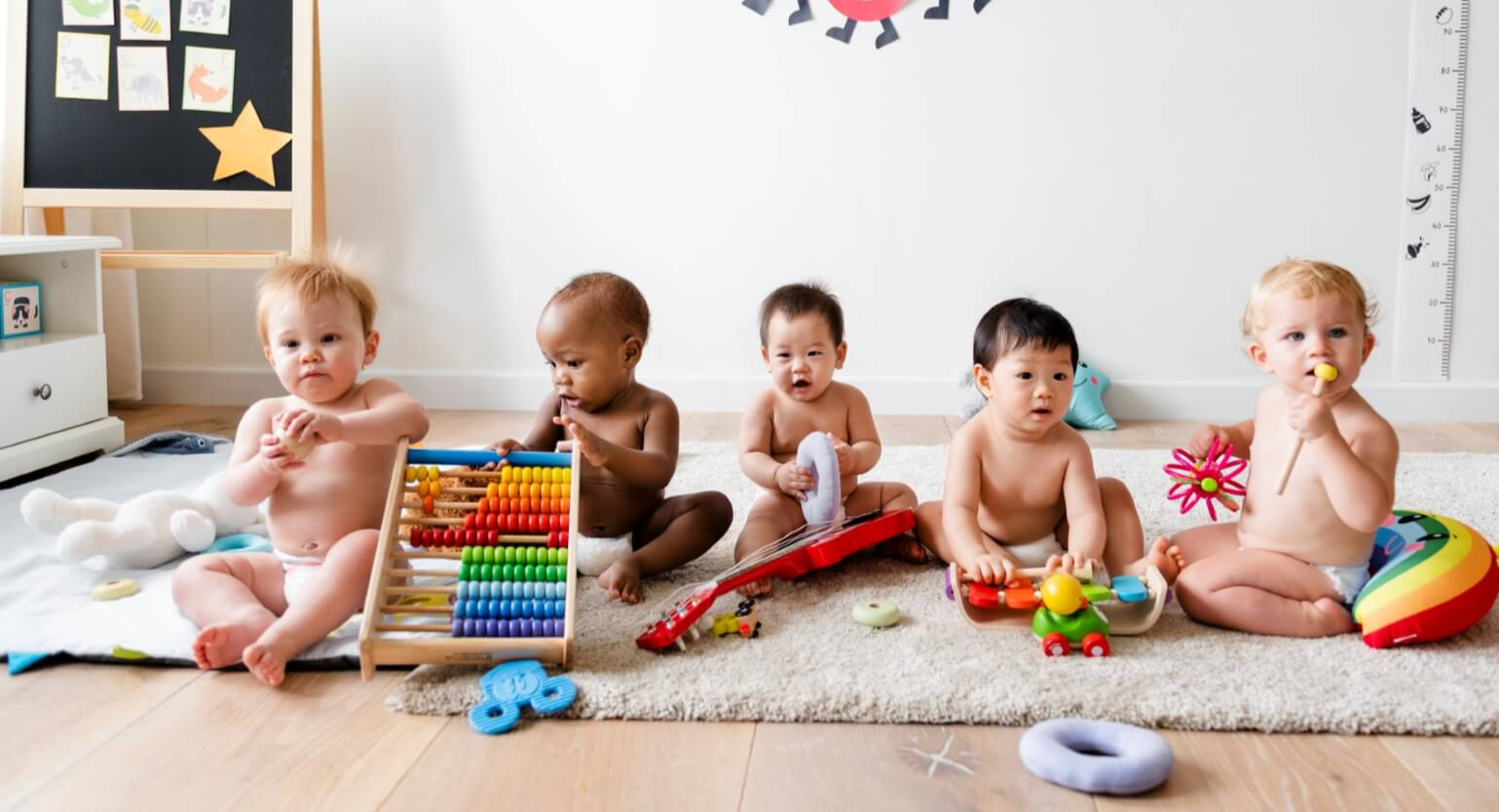
Walk into any toy shop in Pakistan and you will see the word educational on roughly a third of the boxes. It is one of the most overused labels in the entire industry, and for parents who genuinely want to buy something useful for their child, it creates more confusion than clarity. What actually makes a toy educational? Is there a real difference between an educational toy and a regular one, or is it mostly marketing? And if there is a difference, does it actually matter for how much a child learns? At Infantlee, we carry both types and we get these questions from parents regularly. This guide gives you the clearest and most honest answer we can, based on what developmental research actually says rather than what toy boxes claim.
The short version: the distinction between educational toys vs regular toys is real but more nuanced than most people expect. And the answer to what actually helps children learn might surprise you.
The Actual Definition: What Makes a Toy Educational?
The term educational toy has no regulatory definition. Any manufacturer can put it on any box without meeting a single standard. So the label alone means nothing. What actually defines a genuinely educational toy for kids is not what is written on the packaging but what happens when a child plays with it.
A genuine educational toy meets at least one of these criteria: it targets a specific developmental skill such as language, fine motor control, spatial reasoning, numeracy, or emotional understanding. It requires the child to do the thinking, solving, or creating rather than watching the toy perform. It provides feedback when the child does something correctly, either visually, audibly, or through physical completion of a task. And it grows with the child, remaining useful as their abilities develop rather than becoming irrelevant once a single function is discovered.
A regular toy, in contrast, is designed primarily to entertain. It may be beautifully made and genuinely enjoyable, but its purpose is to delight rather than to develop a particular skill. Battery-powered toys with lights and sounds, licensed character figures, novelty items, and most electronic gadgets fall into this category. They are not bad toys. They just have a different purpose.
The most useful test, borrowed from developmental researchers, is this: when your child plays with this toy, who is doing the work? If the toy performs and the child watches, it is regular entertainment. If the child performs and the toy just responds, it is closer to educational. This is the difference between educational and regular toys that actually matters.
Why Regular Toys Are Not the Problem?
Here is where most guides get preachy and unhelpful. The conclusion that educational toys are superior and regular toys are a waste of money is not supported by child development research. What the research actually shows is more interesting than that.
Free, unstructured play with simple objects, a ball, a cardboard box, a set of blocks, a doll, consistently produces rich developmental outcomes. Children build language through narrating their play. They develop emotional intelligence through role play. They practice persistence and problem solving through self-directed creative games. None of this requires a toy with an educational label.
In fact, a 2018 study published in Infant Behavior and Development found that toddlers played more creatively and for longer when given simple, plain toys compared to feature-rich electronic ones. The electronic toys produced shorter, shallower play sessions where the toy did most of the work and the child was primarily an audience.
So, the goal is not to replace all regular toys with educational ones. The goal is to reduce passive, single-function toys that do the playing for the child, and increase open-ended toys whether educational or regular, that invite the child to lead. That is the distinction that actually shapes development.
What the Research Says About Learning Through Play?
The concept of learning through play is not a new idea and it is not contested in developmental science. What is contested is what kind of play produces what kind of learning, and at which age.
For children under 3, sensory and motor play dominates. Touching, mouthing, manipulating objects, and exploring cause and effect are the primary modes of learning. Educational toys that serve this stage are simple, tactile, and physically responsive. A shape sorter, a stacking ring, a soft rattle that makes a noise when shaken: these teach through direct physical interaction.
For children aged 3 to 6, symbolic and dramatic play becomes dominant. Children at this stage are building narratives, developing social understanding through role play, and practicing language at a rapid pace. The toys that serve this stage most effectively are those that support open-ended pretend play: kitchen sets, tool kits, doll play, building blocks. These may not carry educational labels but they deliver some of the richest developmental input available at this age.
From 6 upwards, rule-based and goal-directed play becomes important. Games with clear objectives, strategy, and competition develop planning, impulse control, and the ability to follow complex instructions. This is when structured educational games, puzzles with increasing difficulty, and sports-based play come into their own.
Educational Toys in Pakistan: What to Look for at Each Age?
Ages 1 to 2: Sensory and Cause-and-Effect Toys
The most effective educational toys for kids at 1 to 2 years are those that provide immediate, clear responses to a child's actions. Press this, hear that. Stack these, watch it fall. Insert this card, hear the word spoken. The Card Early Education Machine at Rs. 999 is a strong example: a child inserts a card and immediately hears the corresponding word or sound. The feedback is instant, clear, and repeatable, which is exactly the learning mechanism that works at this age. Simple animal figures for sorting and naming also serve this developmental stage well without needing a battery.
Ages 2 to 4: Pretend Play and Construction
At 2 to 4, pretend play is the primary learning vehicle and the best learning toys for kids at this stage are open-ended sets that give children a scenario to inhabit. Kitchen sets, tool kits, and doll play all produce sustained, language-rich, socially complex play sessions. The Kids Tool Set Toy Kit at Rs. 799 is a Montessori-aligned practical life toy that lets children imitate adult construction work, building fine motor skills and purposeful play in a single activity. For construction, the 98-Piece Marble Ball Pipe Building Blocks at Rs. 2,850 is a self-correcting STEM toy that teaches planning and cause-and-effect through marble run building.
Ages 4 to 6: Complex Pretend Play and Strategy Games
From 4 to 6, children are ready for more elaborate pretend play environments and the first rule-based games. A full 42-Piece Kitchen Play Set with Spray Mist and Music gives a child a complete pretend restaurant to run, with 42 accessories that fuel extended, elaborate play sessions. Our Stacking Game with Box at Rs. 600 introduces early game rules and competitive tension in a format that works for all skill levels. Both develop different but equally important skills.
Ages 6 and Up: Games, Building, and Physical Challenge
For older children, the most valuable toys for child development are ones that require sustained effort and reward improvement. The Climbing Holds 10 PCS Rock Wall Set at Rs. 3,850 builds physical strength, problem-solving, and risk tolerance through climbing wall play. The Games collection at Infantlee covers everything from retro handheld consoles to rhythm games and stacking challenges that serve this age group across different interests.
How to Spot Educational Toy Marketing Hype in Pakistan?
The Pakistani toy market, both online and in physical stores, has a specific set of misleading marketing patterns that parents should recognize:
• The STEM label on a single-function toy: Real STEM learning is open-ended building, experimenting, and problem-solving. A toy that does one programmed action repeatedly is not STEM regardless of what the box says. STEM toys require the child to engineer, test, and modify.
• High price as a proxy for educational value: Expensive imported educational toys are not inherently better for development than a Rs. 600 stacking game or a Rs. 999 card reader machine. Price reflects production costs and branding, not developmental impact.
• Screens marketed as educational for under-5s: The World Health Organization recommends no screen time for children under 2 and limited, supervised screen time for children aged 2 to 5. Educational apps and tablet programs are passive rather than hands-on and do not replicate the developmental benefit of physical play for young children.
• Toys that claim to teach everything: A genuine educational toy can tell you specifically what skill it builds. If the box says this toy develops your child without specifying the skill, treat it as a regular toy in an educational costume.
The Pakistani Parent's Practical Guide to Choosing Better Toys
Buying educational toys in Pakistan does not require spending a lot or committing to a rigid toy philosophy. Here is a simple framework that works across budgets:
• Name the skill first: Decide what you want to support. Language? Motor skills? Problem-solving? Physical coordination? Choose toys that specifically serve that goal rather than shopping by label or price.
• Check who does the work: Before buying, ask whether the child will be doing the thinking or watching the toy perform. Favor toys where the child leads.
• Prioritize open-ended over single-function: A set of building blocks, a kitchen play set, or a set of animal figures that can be used in dozens of different ways will consistently outlast a feature-specific toy that does one thing.
• Buy fewer, better: The research on toy volume is consistent. Four to six good toys available at once produces better play than a room full of options. Rotate toys every week or two to maintain interest without buying more.
• Leave room for regular fun: Not every toy needs a developmental justification. A favorite plush toy, a bouncing ball, a remote-control car that goes fast, all of these have genuine value for a child's happiness and emotional wellbeing even without educational labels.
Why the Educational vs Regular Debate Matters Less Than You Think?
The real question is not educational toys vs regular toys but whether the toys a child has available invite active engagement or passive entertainment. A child who plays deeply and independently with a simple wooden set of farm animal figures is getting more developmental benefit than a child who watches a feature-rich electronic toy flash and beep for twenty minutes before getting bored.
The best toy collection is not all educational and not all regular. It is a mix that covers different kinds of play, different developmental areas, and different moods. Some days a child needs the satisfaction of building something. Other days they need the comfort of a familiar soft toy. And some days they just need to kick a ball around and laugh.
At Infantlee, we carry toys across both categories and we are happy to help you find the right balance for your child's specific age, interest, and developmental stage. Browse our full Toy Zone collection for options that span educational, active, and open-ended play, or explore our 1 to 2 Years, 3 to 5 Years, and 6 to 8 Years collections for age-matched picks that take the guesswork out of choosing.